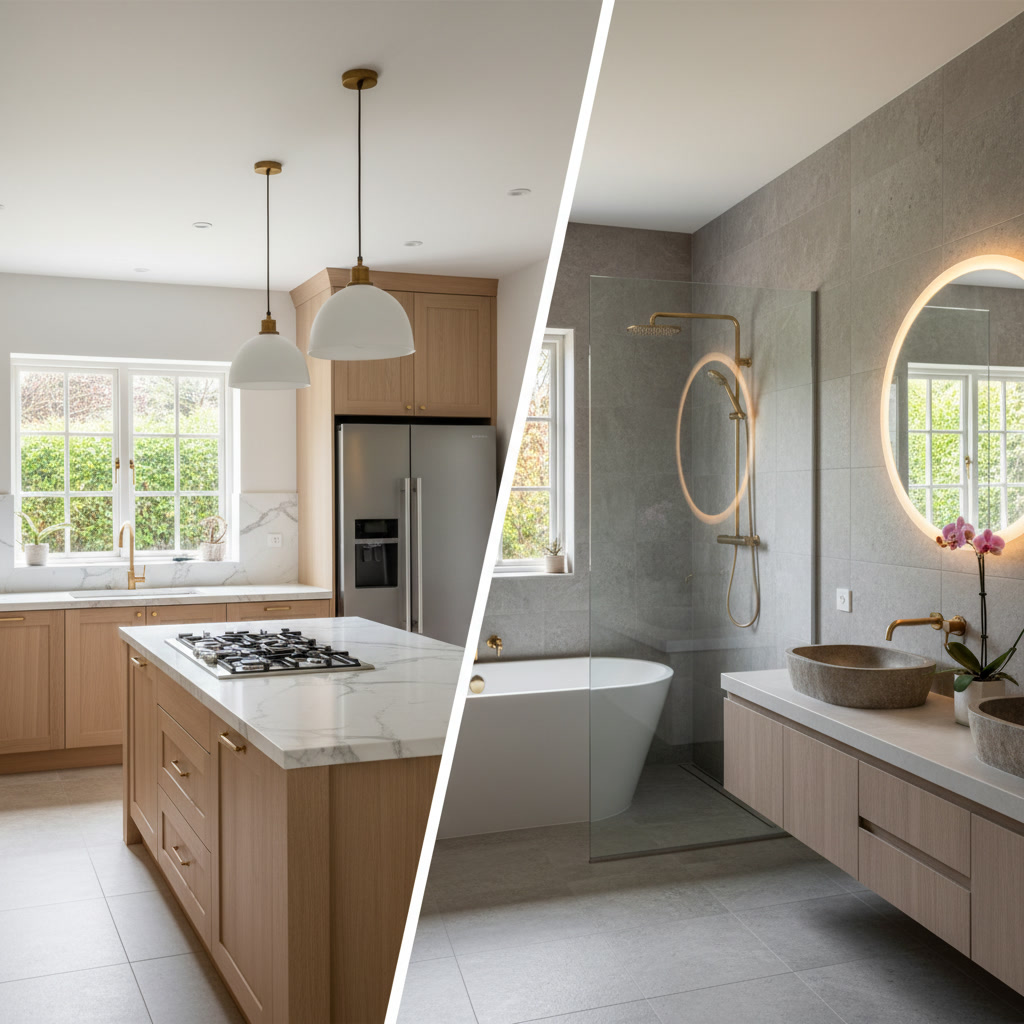
A kitchen versus bathroom remodel comparison shows that kitchens typically return 50 to 80 percent of investment at resale, while bathrooms return 55 to 70 percent, but the best choice depends on your home’s current condition, local market demand, and whether you plan to sell soon or enjoy the improvements yourself. Both renovations add value, but the higher-performing project varies by neighborhood, existing home features, and scope of work.
Homeowners often face this decision when budgets allow for only one major renovation. The right answer balances financial return with daily quality of life. Understanding what drives value in each space helps you invest wisely.
Why Remodeling ROI Matters Even if You Aren’t Selling
Return on investment figures guide smart renovation decisions whether you plan to sell next year or stay for a decade. A project that recovers 70 percent of its cost protects your equity and ensures you aren’t over-improving for your neighborhood. Even if resale is years away, choosing renovations that hold value keeps your home competitive and avoids the trap of spending more than buyers will pay back.
Local market conditions shape these returns significantly. Homes in neighborhoods where most properties have updated kitchens see less incremental value from your own kitchen upgrade, while a modern bathroom might stand out. Conversely, if you live in an area where granite counters and stainless appliances are standard, a dated kitchen actively drags down your home’s appeal.
How Kitchen Remodels Build Equity and Appeal in Mesa
Kitchens function as the central hub for families and a focal point during home tours. Buyers notice outdated cabinets, worn countertops, and inefficient layouts immediately. A well-executed kitchen remodel addresses these issues while improving functionality. In the Phoenix metro area, where open-concept living remains popular, removing a wall between kitchen and living space can deliver outsized value compared to cosmetic updates alone.
Minor kitchen remodels, typically costing between 15,000 and 25,000 dollars, focus on cabinet refacing, new countertops, updated fixtures, and modern appliances. These projects often return 70 to 80 percent at resale. Major remodels involving custom cabinetry, high-end appliances, and layout changes can exceed 60,000 dollars but may return only 50 to 60 percent, especially if the finishes exceed neighborhood norms.
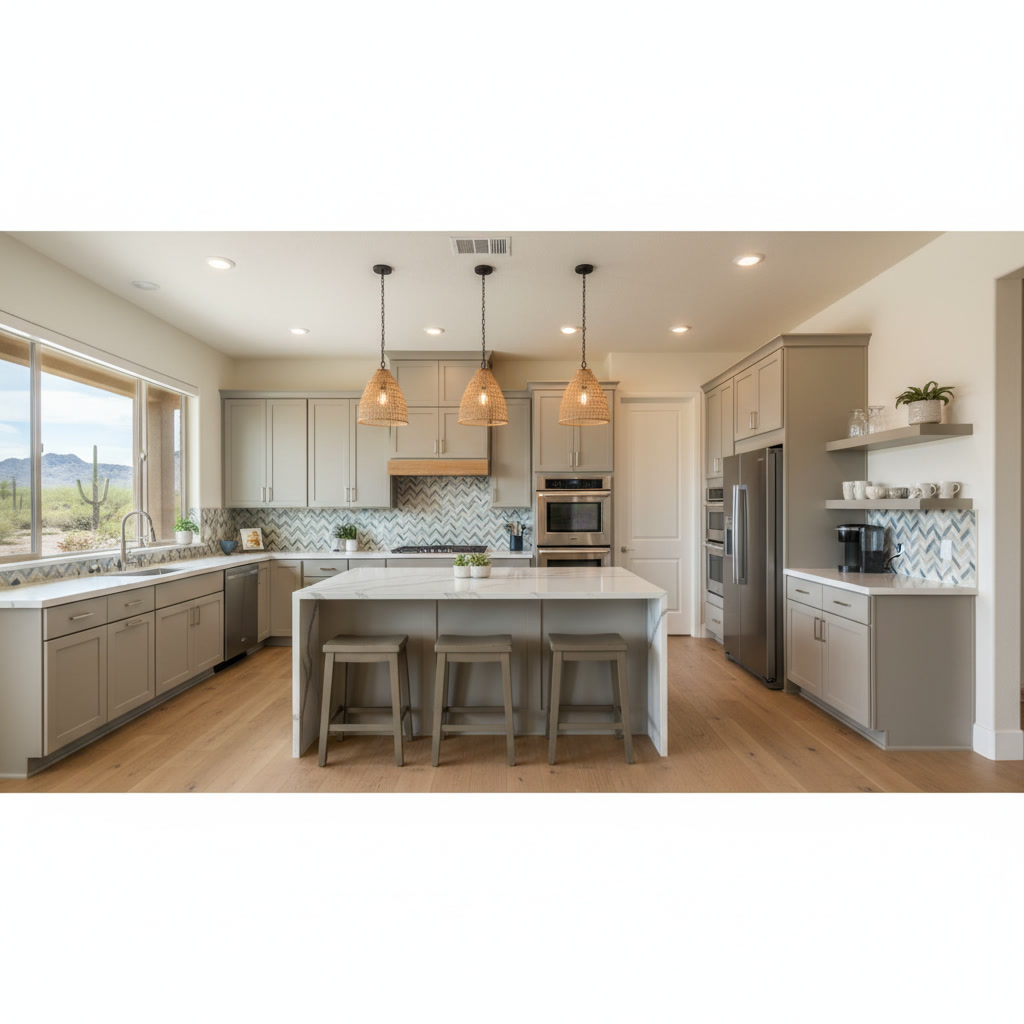
The key to maximizing kitchen remodel value lies in matching the quality level to your home and neighborhood. A 40,000-dollar kitchen in a 250,000-dollar home risks over-improvement, while the same budget in a 500,000-dollar property feels appropriate. Professional home remodeling guidance helps calibrate your investment to market expectations.
Bathroom Upgrades That Deliver Measurable Returns
Bathrooms offer strong returns partly because many homes need multiple bathroom updates, and smaller square footage keeps costs manageable. A full bathroom remodel typically costs 12,000 to 20,000 dollars for a standard five-by-eight-foot space. Homeowners can often tackle two bathrooms for the price of one kitchen, multiplying the impact throughout the home.
Specific upgrades drive the strongest returns. Replacing a worn tub-shower combo with a walk-in tile shower appeals to modern buyers and improves accessibility. Double vanities in master baths command premium value in family-oriented markets. Updated fixtures, improved lighting, and quality tile work transform dated spaces without requiring structural changes.
The decision between updating a master bath versus a guest bath affects value differently. Master bathroom remodels typically return 55 to 65 percent, while adding a half-bath where none existed can return up to 50 percent of cost while dramatically improving home functionality. Families with one bathroom see the largest quality-of-life improvement from adding a second, even if the pure ROI percentages appear lower.
Comparing Project Costs and Timelines
Kitchen remodels generally require four to eight weeks for completion, depending on scope. Cabinet lead times, appliance delivery, and countertop fabrication drive much of this schedule. Homeowners lose kitchen access during construction, requiring meal planning adjustments and temporary cooking arrangements.
Bathroom projects typically complete in two to four weeks for a full renovation. Smaller footprints mean faster demolition and installation. Homes with multiple bathrooms allow families to continue normal routines during work, reducing disruption. This practical advantage sometimes tips the scale when homeowners weigh home repairs and upgrades.
Budget considerations extend beyond the contractor’s quote. Kitchen remodels often trigger additional costs for temporary kitchen setups, eating out during construction, and upgraded electrical service for modern appliances. Bathroom projects may require plumbing rerouting, mold remediation in older homes, or ventilation improvements. Setting aside 15 to 20 percent contingency for either project protects against surprises.
Local Market Preferences in the Phoenix Metro
Phoenix-area buyers prioritize different features than coastal or northern markets. Desert climate considerations shape bathroom preferences, with homeowners valuing moisture management, efficient ventilation, and materials that withstand low humidity. Walk-in showers outperform soaking tubs in resale value here, contrasting with markets where luxury tubs add cachet.
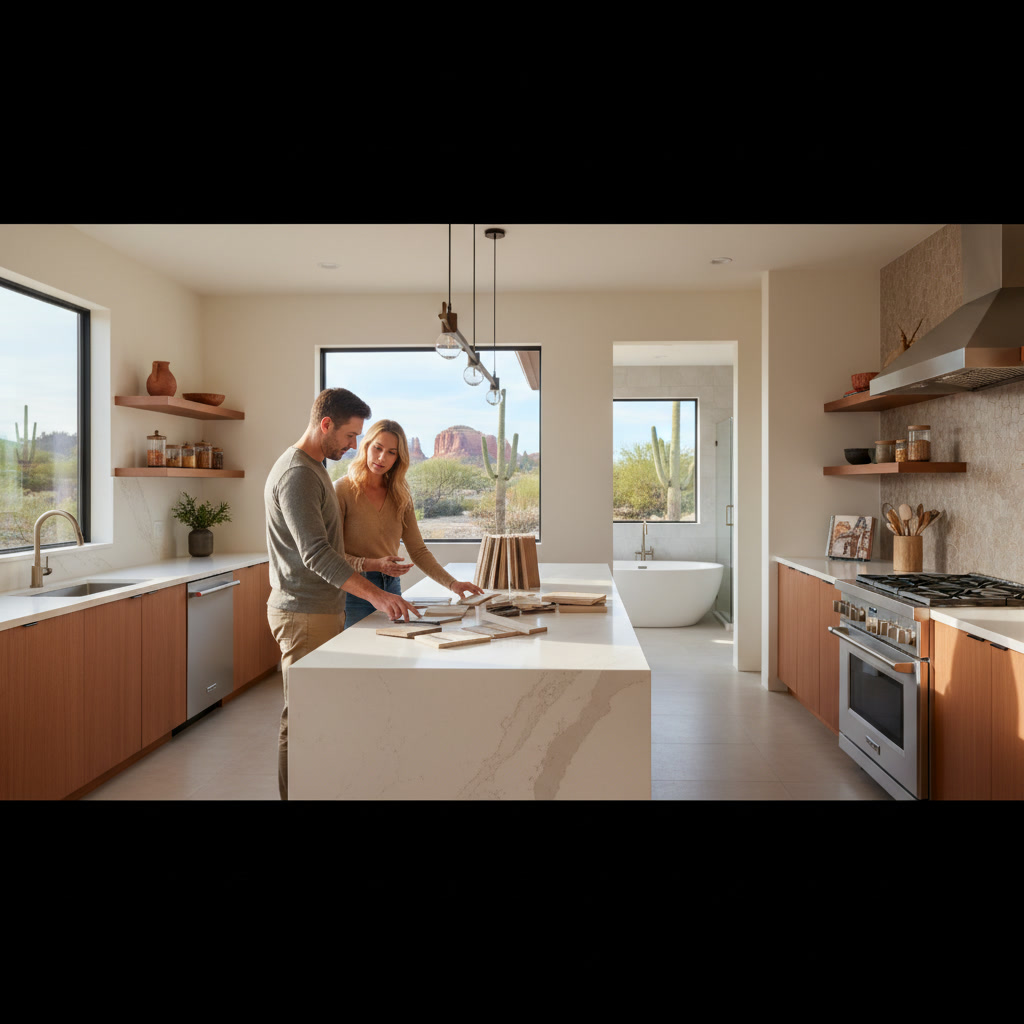
Kitchen priorities lean toward open layouts, outdoor access for indoor-outdoor entertaining, and appliances that handle large family gatherings. Islands with seating, abundant storage, and sight lines to living areas consistently top buyer wish lists. Homes in Scottsdale, AZ or Gilbert, AZ often compete with newer construction, making updates essential to remain competitive.
Working with contractors who understand local buyer expectations helps avoid costly missteps. Phoenix Primera Builders LLC has completed hundreds of renovations across the metro area, developing insight into which features command premium prices and which represent personal preference without resale payoff.
When Your Home Condition Decides for You
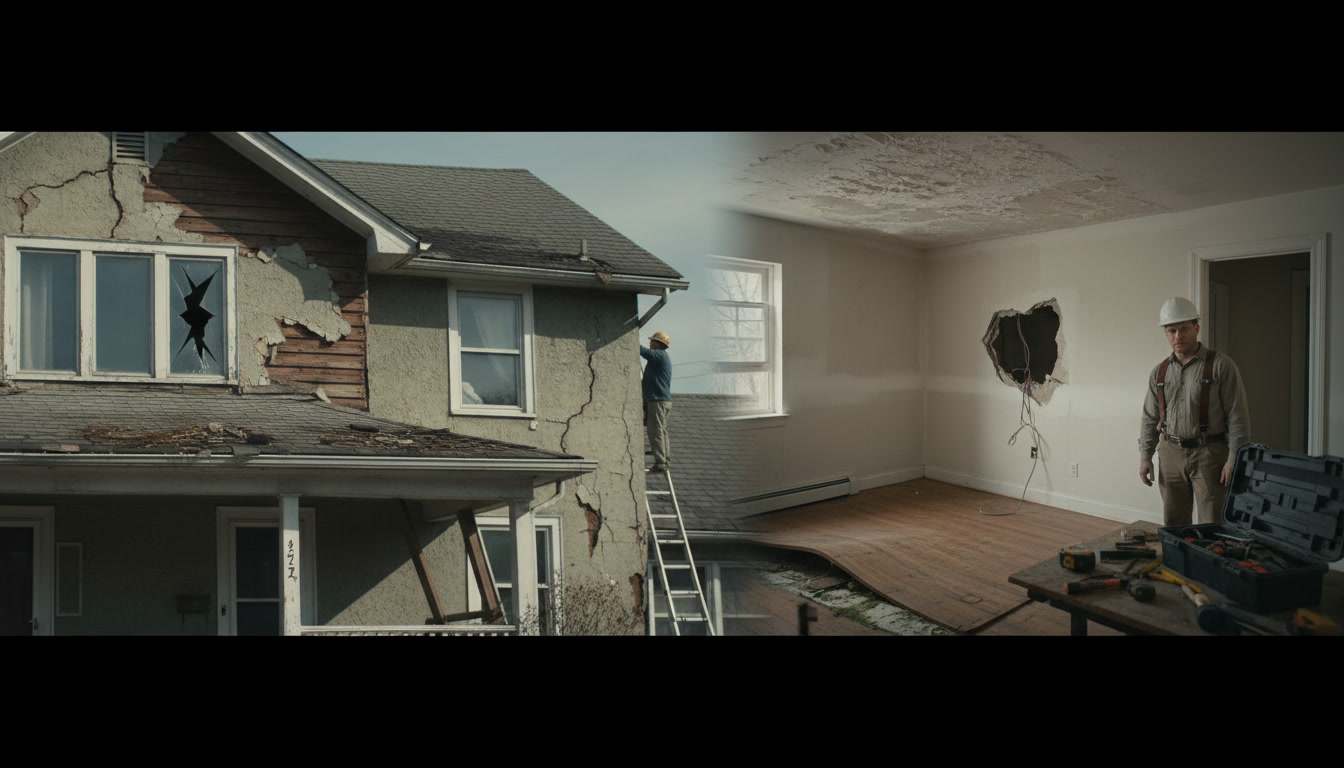
Sometimes the choice becomes obvious based on current home condition. A bathroom with water damage, mold, or failing fixtures requires immediate attention regardless of ROI calculations. Deferred maintenance in bathrooms risks structural damage to subfloors, joists, and adjacent rooms, turning a 15,000-dollar remodel into a 30,000-dollar repair and renovation.
Similarly, kitchens with outdated electrical systems, non-functional appliances, or safety hazards demand priority. Homes built before 1980 often need electrical upgrades to support modern kitchen loads. Addressing these issues during a planned remodel costs less than emergency repairs later, and the improved functionality pays dividends immediately.
Inspection reports from recent home purchases highlight which systems need attention first. If your home inspection flagged bathroom moisture issues or kitchen ventilation problems, prioritizing those spaces protects your investment beyond simple ROI calculations. Strategic planning for phased improvements, similar to considerations in home addition cost planning, helps homeowners sequence projects logically.
The Scope Factor: Minor Refresh Versus Full Renovation
Minor updates in either space deliver disproportionate impact when existing layouts function well. A kitchen refresh involving cabinet painting, new hardware, updated lighting, and modern faucets can cost 5,000 to 8,000 dollars while dramatically improving appearance. Bathroom updates with new vanity, toilet, fixtures, and paint similarly transform spaces for 3,000 to 6,000 dollars.
These smaller projects often return 90 to 100 percent of investment because costs stay low while visual impact remains high. Homeowners gain refreshed spaces without the disruption or expense of full renovations. This approach works best when existing layouts suit your needs and major systems remain functional.
Full renovations make sense when layouts fail, systems need replacement, or style updates cannot mask fundamental problems. Moving plumbing, reconfiguring spaces, or addressing structural issues requires larger budgets but solves problems cosmetic updates cannot fix. The decision point typically arrives when you find yourself working around layout limitations daily or when multiple systems reach end-of-life simultaneously.
Choosing Based on Your Timeline and Goals
Homeowners planning to sell within two years should prioritize projects with the highest resale returns in their specific market. Real estate agents provide invaluable guidance about which updates matter most to local buyers. In competitive markets, both updated kitchens and bathrooms may be necessary to achieve top-dollar offers, while slower markets might favor concentrating resources on the single most impactful space.
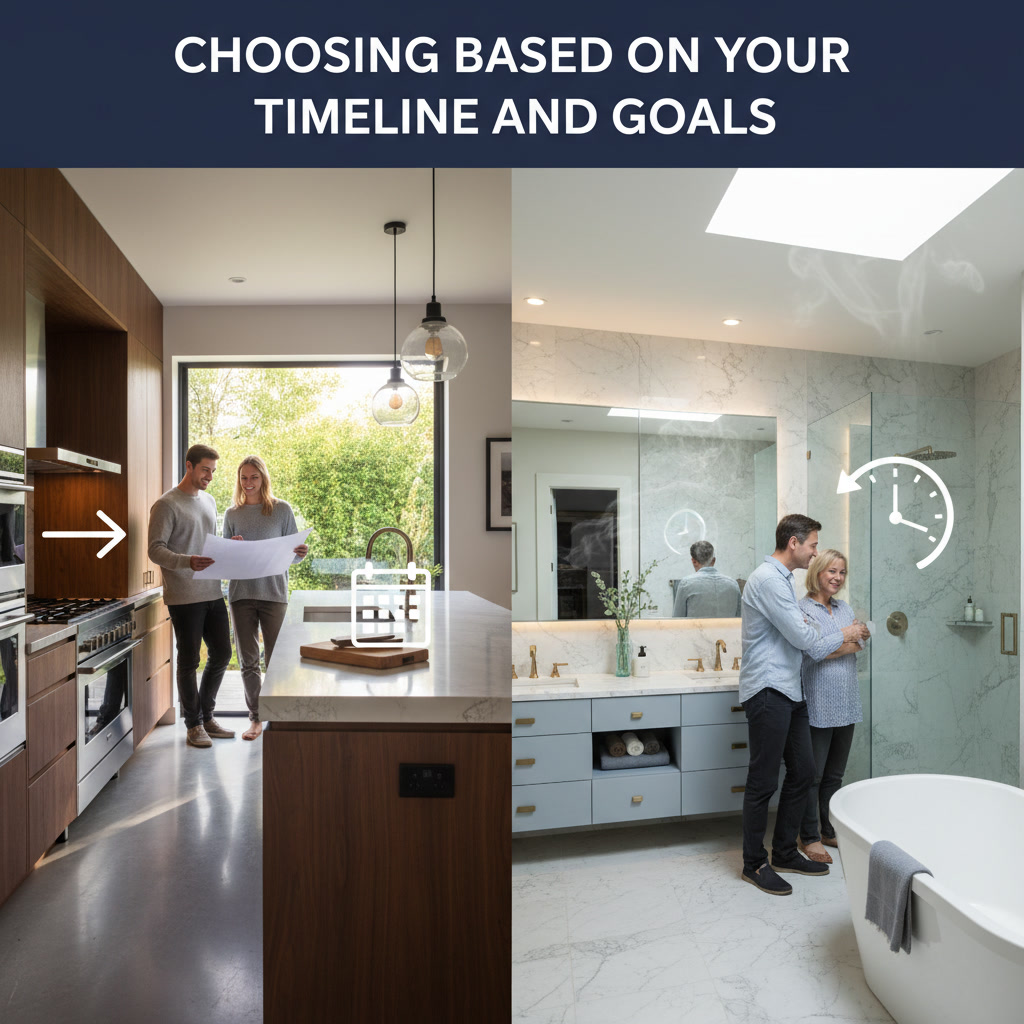
Long-term homeowners should weight personal enjoyment more heavily. If you cook daily and a cramped, dysfunctional kitchen frustrates you, the quality-of-life improvement from renovation justifies the investment regardless of ROI percentages. Similarly, families sharing one outdated bathroom experience daily stress that a second bath would eliminate, making that project the clear choice.
Budget constraints often dictate sequencing. Starting with the project delivering the greatest combination of livability improvement and value protection makes sense. Many homeowners complete one major renovation, live with the improvement for a year or two, then tackle the second space. This approach spreads costs across time while allowing you to enjoy each upgrade.
How Multiple Bathrooms Change the Equation
Homes with only one bathroom face different calculations than those with two or more. Adding a second bathroom where none existed, or converting a half-bath to a full bath, delivers substantial value because it fundamentally changes how the home functions. Families no longer compete for morning bathroom access, and guests gain privacy.
These additions often combine with home additions that expand usable square footage. A bedroom addition paired with a new bathroom creates more value than either project alone. The combined investment typically returns 50 to 60 percent but transforms how your family uses the home.
Homes with three or more bathrooms see diminishing returns from additional bathroom remodels unless existing baths are severely outdated. At that point, kitchen updates often deliver better value because the home already meets basic bathroom quantity expectations. Each additional bathroom beyond three adds decreasing marginal value in most markets.
Smart Combinations That Maximize Value
Many homeowners discover that partial projects in both spaces deliver better results than going all-in on one. A minor kitchen refresh paired with a full master bath remodel might cost the same as a major kitchen renovation alone, while addressing needs in both areas. This balanced approach often satisfies the practical needs homeowners face while building equity effectively.
Phasing projects by starting with critical repairs, then moving to cosmetic updates, protects your investment. A bathroom with plumbing issues gets new pipes, fixtures, and finishes in one project rather than patching problems temporarily. A kitchen with failing appliances receives new equipment alongside updated counters and backsplash, creating cohesive improvements.
Strategic planning involves assessing your entire home’s condition, not just isolated spaces. Working with experienced contractors who evaluate electrical, plumbing, and structural systems during planning prevents discovering expensive surprises mid-project. This holistic view, similar to approaches used in residential construction, ensures resources flow to the highest-priority needs.
Making the Choice That Fits Your Home
No universal answer determines whether kitchen or bathroom remodeling delivers better value. Your specific home, neighborhood, timeline, and priorities shape the right decision. Kitchens generally offer higher absolute returns in dollars, while bathrooms provide strong percentage returns on smaller investments. Condition issues, family needs, and local market preferences further refine the choice.
The most successful approach involves assessing your home’s current state, understanding your local market, clarifying your timeline, and matching project scope to your budget. Professional evaluation identifies which space needs attention most urgently and which improvements deliver the best combination of livability and value for your situation.
Phoenix Primera Builders LLC brings more than 20 years of experience helping homeowners across the Phoenix metro make these decisions and execute renovations that enhance daily living while protecting home value. Whether you need guidance choosing between projects or expert execution once you decide, our team delivers the craftsmanship and market knowledge your investment deserves. Call +14806211744 to discuss your kitchen or bathroom remodel and discover how we can help you make the choice that best serves your goals.